
Anhinga - Bird of the Week
Anhinga
Five Fun Facts About Anhingas
Unique Swimming Style
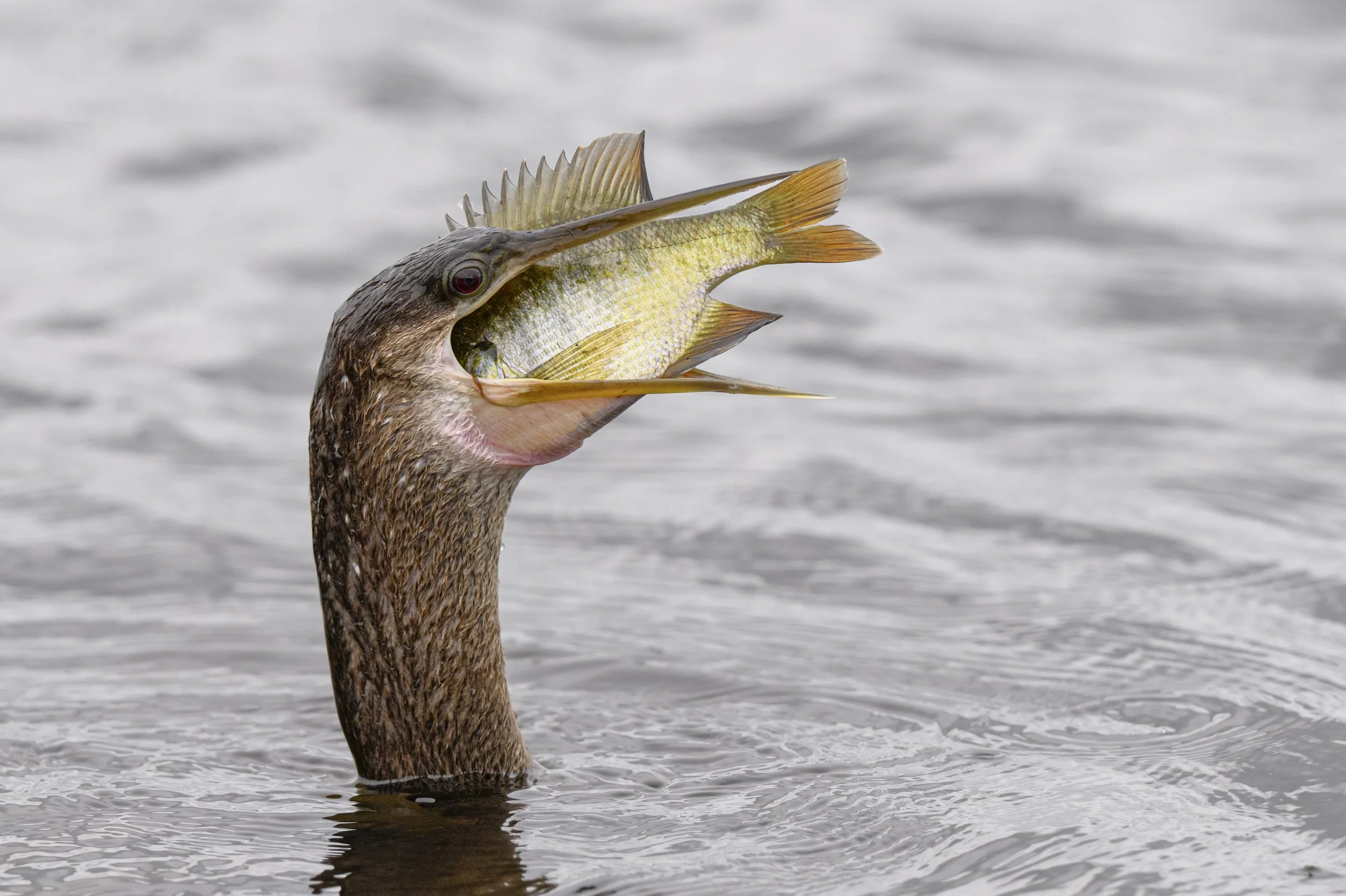
Anhingas are often called "snake birds" due to their unique swimming style. When they swim, only their necks are visible above water, resembling a snake gliding through the water. This stealthy swimming technique allows them to approach prey without being easily detected. Anhingas have evolved several adaptations that make them exceptional underwater hunters. Their long, sharp bills are perfectly designed for spearing fish, while their webbed feet provide powerful propulsion through the water. Additionally, their dense bones help them to stay submerged and maneuver with agility.Expert Fish Catchers
These birds are expert fish catchers. Anhingas hunt underwater by spearing fish with their sharp, pointed bills. Once they've caught their prey, they bring it to the surface and flip it into the air before swallowing it headfirst.Drying Rituals
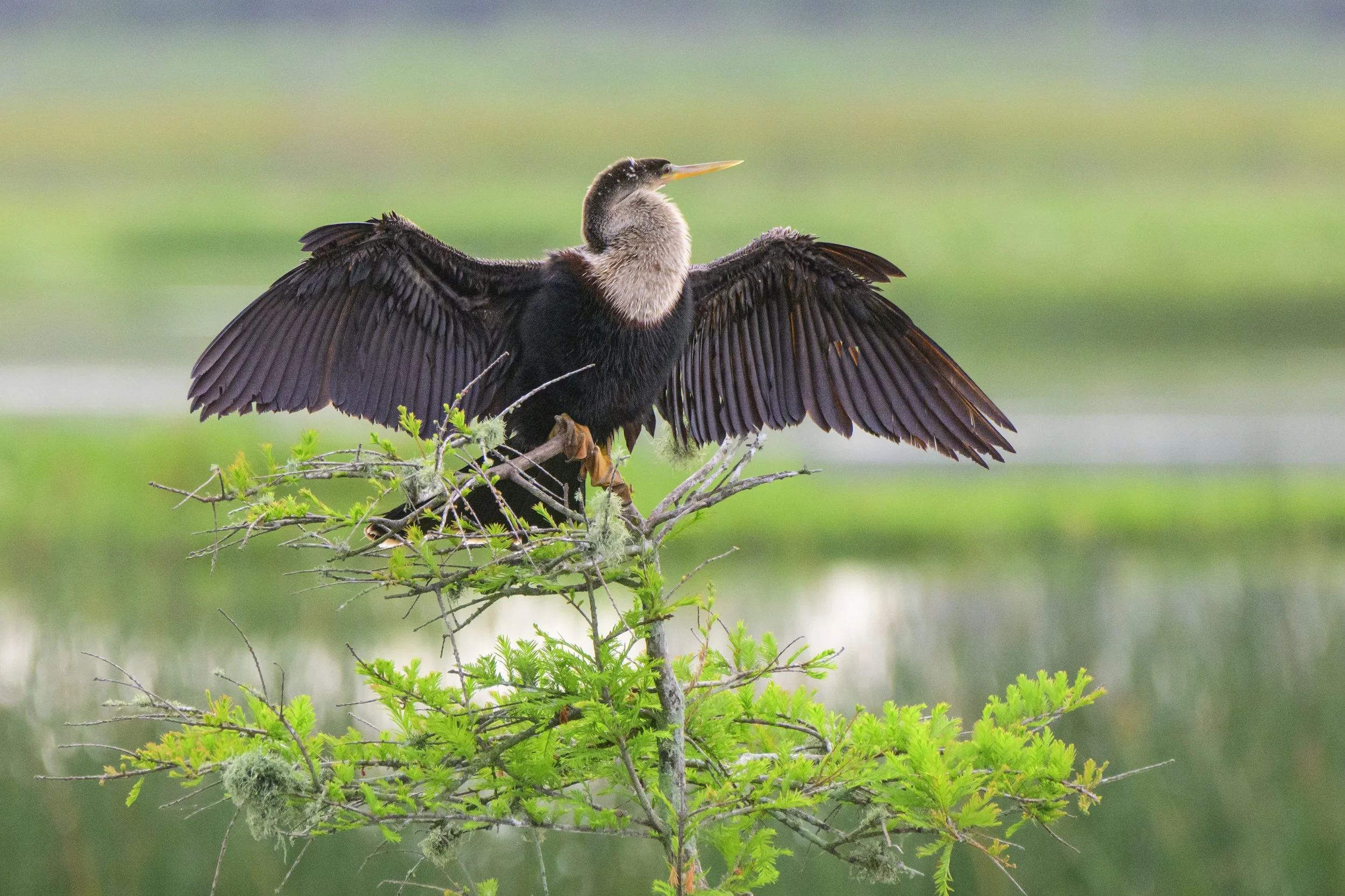
Unlike many water birds, Anhingas have less preen oil to waterproof their feathers. This makes them better divers but causes their feathers to become waterlogged. To dry off, Anhingas often spread their wings wide in the sun, a behavior that also helps regulate their body temperature.Habitat and Range
Anhingas are commonly found in warm, shallow waters across the southeastern United States, Central America, and South America. They prefer freshwater environments such as swamps, marshes, and slow-moving streams, where they have plenty of opportunities to fish and sunbathe.Flight
Although Anhingas are primarily known for their aquatic prowess, they are also exceptional flyers. With their large wingspan and aerodynamic body, they can soar gracefully in the sky, often covering long distances in search of food or suitable habitats. Their flight is characterized by strong wing beats, followed by periods of gliding, which conserves energy and allows them to traverse vast areas efficiently.
The Anhinga is a fascinating bird with a remarkable range of adaptations that allow it to thrive in aquatic environments. Whether they are gliding through the water or drying their wings in the sun, Anhingas offer bird watchers plenty of interesting behaviors to observe.
Anhingas are currently classified as a species of least concern, thanks to their wide distribution and stable population numbers. However, they are still affected by habitat destruction and pollution, emphasizing the importance of preserving their natural environments to ensure their continued survival.
Want a chance to photograph Anhingas for yourself? Join our Women in Wildlife Florida Nesting Birds Photography Tour